Weather and what to wear
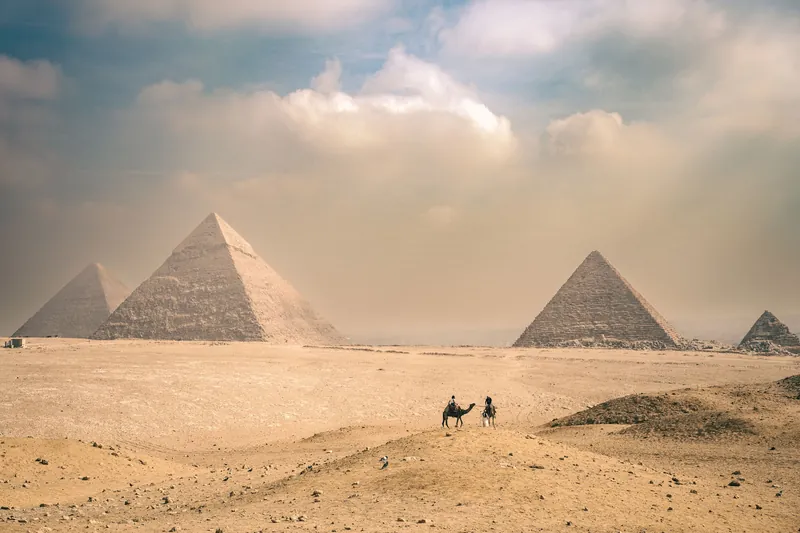
Giza is dry for most of the year, with cool mornings in winter and long, hot days from May to September. Dress for sun and sand, and pack light, because the museum and several tours restrict bags.
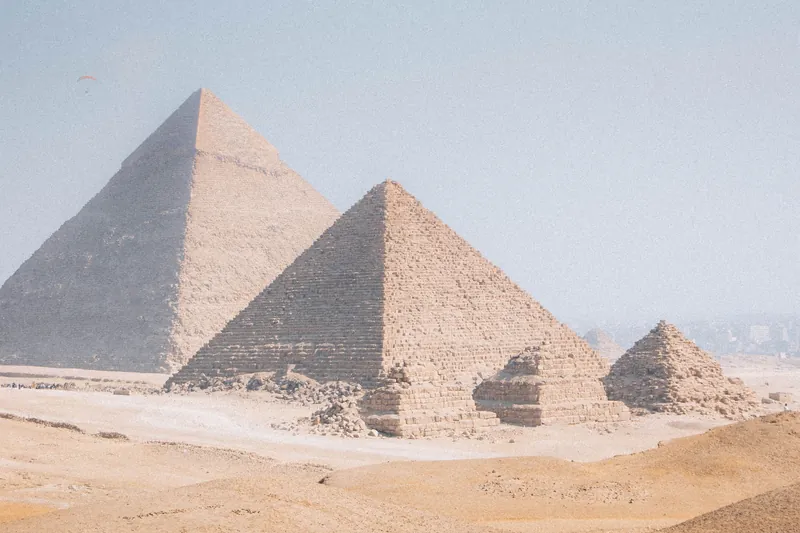
The climate figures on this page are long-term averages from the World Meteorological Organization for the station at Cairo Airport, about 35 km from the plateau. They describe the city rather than the open desert edge at Giza, but they show the pattern clearly: a short, mild winter, a hot and completely dry summer, and spring and autumn in between. The clothing suggestions are drawn from those figures and from the rules of the museum and the tours, not from an official dress code.
December to February
The coolest months have average highs of 19 to 20 °C and lows of about 10 °C. At 7 am, when the plateau opens, the temperature is still close to the overnight low. By midday a T-shirt is often enough. Layers work best: a light jumper or fleece and a windproof jacket that fits in a small bag. This is also when Cairo gets most of its little rain, between 2.5 and 3.8 rain days a month, so a thin waterproof is enough. The days are short, with sunset at about 5 pm in December.
March to May
Spring warms up quickly, from an average high of 23 °C in March to 28 °C in April and 32 °C in May. Mornings stay comfortable into April. The khamsin, a hot, dust-laden wind, typically blows between March and May. On 30 April 2025 the Egyptian Meteorological Authority issued a high-impact warning for winds of 40 to 60 km/h with gusts up to 80 km/h and sharply reduced visibility, and recommended masks outdoors. On such a day a scarf or mask, sunglasses and covered arms make the visit more bearable.
June to September
From June to August the average high at Cairo Airport is about 35 °C, and nights stay above 21 °C. September is barely cooler at 33 °C. There is no rain in these months. The sun rises before 6 am in June, while the plateau opens only at 7 am, so the coolest hour on site is the first one. Wear loose, light clothing that covers the shoulders and arms against the sun, a hat with a brim and sunglasses, and carry more water than you think you need. Several tours on this site include bottled water; check the inclusions of your option.

The Grand Egyptian Museum is the natural place for the afternoon. Its galleries are open until 6 pm, and until 9 pm on Wednesday and Saturday.
October and November
October still averages 30 °C, November about 25 °C, with lows falling from 19 °C to 15 °C. Clocks in Egypt go back at the end of October, so from November the sun rises around 6:10 am and sets at about 5:10 pm. Summer clothing works for the middle of the day, with a light layer for the morning.
Daylight through the year
The US Naval Observatory's tables for the plateau show how much the day changes. On 1 December the sun rises at 6:33 am and sets at 4:55 pm. On 1 March the times are 6:22 am and 5:54 pm, and by 1 June, with summer time in force, 5:55 am and 7:52 pm. The plateau keeps the same hours all year, so in winter the last entry at 4 pm comes less than an hour before sunset, and in summer you leave the site in full sun. If you join a tour with a 5 am pickup, dress for the cool air before sunrise and carry a layer you can pack away later in the morning.
Shoes and sand
The plateau is a desert site with sand and loose stone underfoot, and most visits involve a good deal of walking. Closed shoes with a firm sole are the sensible choice all year. Sandals are a poor idea in the sand and are explicitly not allowed on the microlight flight over the pyramids, which also bans hats and selfie sticks. If you plan a camel or horse ride, long trousers are more comfortable than shorts.
Bags and what not to bring
Pack light. The museum ticket listed on this site does not allow backpacks or large bags, and neither food nor drink from outside. Inside the galleries, flash photography, tripods, selfie sticks, drones and live streaming are not permitted, according to the rules published when the museum opened. Some tours set their own limits: the sunrise tour does not allow luggage or large bags, and one half-day tour bans drones on the plateau. Taking photos on the plateau with a mobile phone is free, according to the official ticket portal. For the rest of your preparation, see tickets and opening hours and the best time to visit.
Questions travellers ask
How cold is it at the pyramids in winter?
Average lows at Cairo Airport are about 10 °C in January and 11 °C in December, and the highs reach 19 to 20 °C. Mornings at opening time feel cool, so bring a warm layer you can take off later.
Does it rain in Giza?
Rarely. From December to March Cairo averages 2.5 to 3.8 rain days a month, with only a few millimetres in total. From June to August there is practically no rain at all.
Is there a dress code at the pyramids?
No official dress code for the plateau or the Grand Egyptian Museum could be found for this guide. Practical clothing for sun and sand is what matters most: closed shoes, a hat and something to cover your shoulders against the sun.
Can I bring a backpack to the Grand Egyptian Museum?
The museum ticket listed on this site says backpacks and large bags are not allowed, and neither are food and drink. When the museum opened, flash photography, tripods, selfie sticks and drones were not allowed inside.
What is the khamsin?
A hot, dusty wind that typically blows between March and May. During a storm in April 2025 the Egyptian Meteorological Authority warned of gusts up to 80 km/h and very poor visibility and advised masks outdoors.
Where these facts come from
Dates, opening hours and rules change. We checked these pages in November 2026; the official source has the final word.
- WMO World Weather Information Service: Cairo (climate 1981 to 2010)
- US Naval Observatory: sun and twilight data for the Giza plateau
- Experience Egypt (Ministry of Tourism and Antiquities): Giza plateau
- Grand Egyptian Museum: official ticketing
- Ahram Online: Egypt issues weather alert as powerful khamsin storm approaches, 29 April 2025
- Khaleej Times: Grand Egyptian Museum visitors guide, 9 November 2025
- Tour and ticket pages on GetYourGuide, checked 2 November 2026